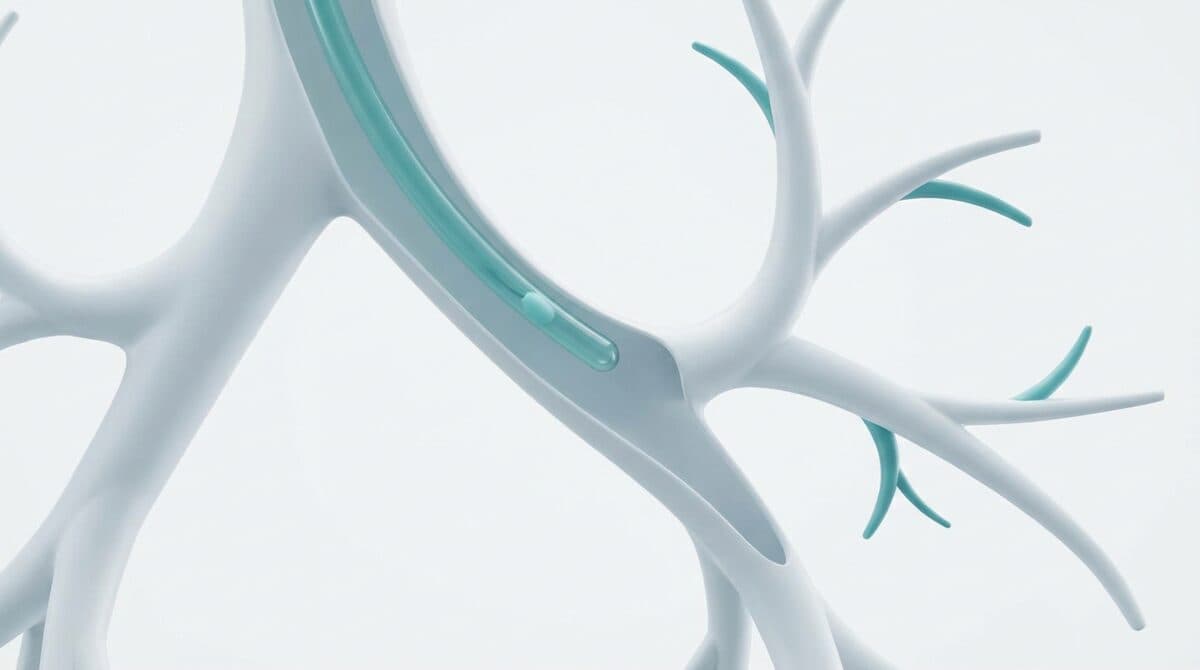
Bronchoscopic COPD treatments are interventions performed without surgery using a bronchoscope advanced through the mouth. The main ones are: endobronchial valves that shut off an overinflated lung region, coils that reduce lung volume, steam-based tissue reduction (thermal ablation), and balloon methods that clear the airway layer in chronic bronchitis. Each suits specific patient groups.
Contents
In advanced COPD, medication and pulmonary rehabilitation are not always enough. In recent years, bronchoscopic interventions developed as an alternative to surgery aim to relieve symptoms without open surgery. These methods are performed with a thin bronchoscope advanced through the mouth; there is no incision. The key is knowing that each method is designed for a different patient profile. Below you'll find the main bronchoscopic COPD treatments and who they suit.
Endobronchial valves
Designed for patients where emphysema is dominant and a specific part of the lung is overinflated. One-way small valves block air entry to the diseased region while letting trapped air escape. This shrinks that region so healthy lung tissue works more efficiently. Eligibility requires the absence of airflow between regions (collateral ventilation), which is assessed with special tests.
Lung volume reduction coils
Small nitinol wires (coils) placed in the lung via bronchoscope compress the region where they are placed, reducing its volume. Unlike valves, they can also be used in patients with airflow between regions. The aim is to gather up overinflated, non-functioning regions to reduce the load on the breathing muscles.
Thermal steam ablation
Controlled hot water vapour is delivered to the targeted lung region, producing a controlled shrinkage and volume reduction there over time. It is considered in selected emphysema patients with anatomies suitable for regional treatment.
Balloon methods (chronic bronchitis focused)
While the methods above mostly target emphysema, in chronic-bronchitis-dominant patients the problem is a thickened airway layer producing excess, thick mucus. Balloon-based methods target this layer: a catheter with a balloon at its tip widens the narrowed bronchi and clears the thickened mucus/goblet cell layer. COPD balloon therapy (Broncho Muco Cleaner) is in this group and is evaluated for patients with smoking-related chronic bronchitis who do not respond adequately to medication.
None of these methods cure COPD, and each is designed for specific patient profiles. The right method is determined only through pulmonary function tests, imaging and specialist assessment. A method suitable for one patient may not suit another at all.
Which method suits whom?
- Endobronchial valves — regional emphysema patients without collateral ventilation
- Coils — a broader group including emphysema patients with airflow between regions
- Steam ablation — selected emphysema patients suitable for regional treatment
- Balloon methods — chronic-bronchitis-dominant patients with thick mucus and airway narrowing
Frequently asked questions
Are bronchoscopic COPD treatments surgery?
No. These are interventions performed with a bronchoscope advanced through the mouth, requiring no incision. They are less invasive than open surgery but must still be done at an experienced center with specialist assessment.
Do these methods cure COPD?
No. Bronchoscopic interventions do not cure COPD; their aim is to relieve symptoms (especially breathlessness) and improve quality of life. Smoking cessation, medication and pulmonary rehabilitation remain part of the core treatment.
How do I find out which method suits me?
The suitable method is determined by pulmonary function tests, lung imaging and assessing whether emphysema or chronic bronchitis is dominant. This assessment can only be made by a pulmonologist.
Related pages
Would you like information about COPD balloon therapy?
Our team is ready with a free preliminary assessment and information tailored to you.
This content is for information only and does not replace a physician's examination. Consult a healthcare provider for diagnosis and treatment.